Finding Your Farm: How to get started in small-scale development
Whether you’re a seasoned urbanist or a relatively new urbanist, you may have heard the terms “small-scale development” or “incremental housing”, but have wondered what it is or how to get started. I’ve been following three leaders in the field of urban-friendly development and I’m impressed with how they concisely explain their initiatives. For example, have you heard the catchy phrases, “find your farm” or “unleash the swarm”? After many years receiving lots of guidance entering the world of small-scale development, I too, hope to offer a few tidbits that can help others forge their own unique path to action - even if you are limited by physical location, cash flow, professional network, or phase of life.
Organizations that Support Small-Scale Developers like You and Me
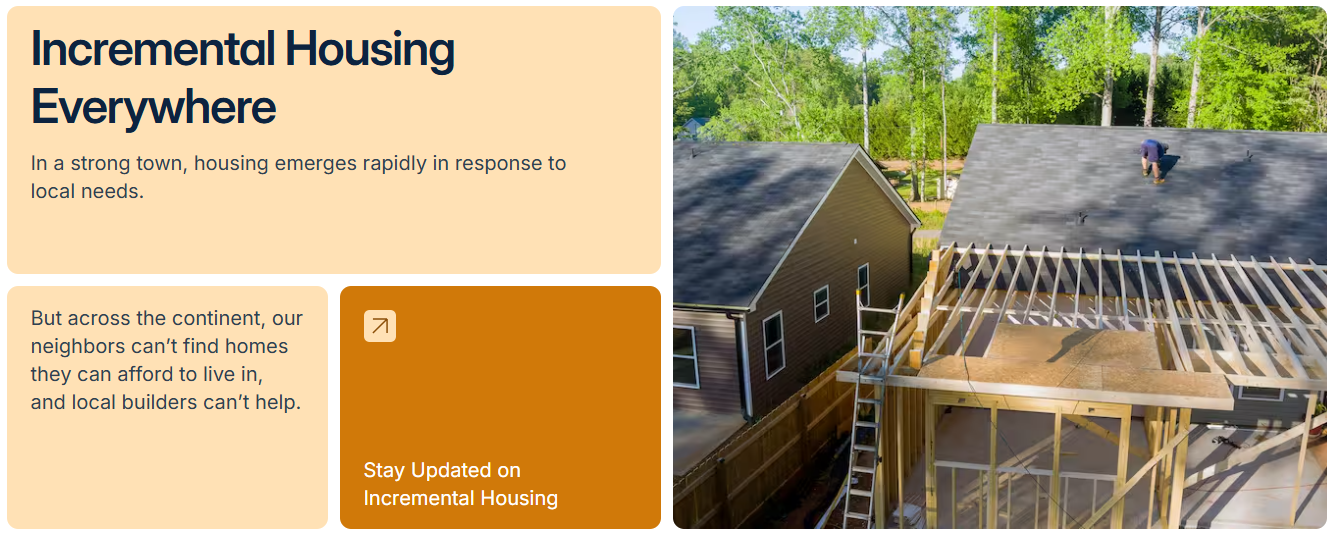
Emerging New Urbanists (ENU) is allied with many urbanist organizations, including Strong Towns (ST), the non-profit urban advocacy organization that has now reached a worldwide audience with thousands of followers and changemakers from its home base in North America. I’m a huge supporter of ST’s 5 core campaigns, but I particularly support their Incremental Housing core campaign, especially in existing, walkable neighborhoods:
Before I begin my own analysis, I want to introduce you to some notable non-profit organizations that complement and contribute to ST’s pro-housing campaign, in particular:
- Incremental Development Alliance (IncDev) is an advocacy organization that trains, promotes, and empowers citizens of all levels to start building and renovating housing units in their local communities. They offer their free teaser training via the ST Academy.
- Neighborhood Evolution (NEVO) is a development consulting group deeply committed to giving local citizens the tools, knowledge, networking, and confidence needed to take action and revitalize their communities. They also offer their 12 Steps to Town Making training course via the ST Academy.
Find Your Farm
One of the main points that leaders from both IncDev and NEVO emphasize when starting your small-scale developer journey is to “find your farm”, a term coined by Monte Anderson and Jim Kumon of NEVO. Much to the confusion of my mom and others, the phrase is a bit of a misnomer because it doesn’t literally mean searching for farmland, looking for viable agricultural plots, or joining farm-centric agrihood communities. The phrase “find your farm” essentially means committing your time, money, and resources to a specific place (street, neighborhood, town, or city) for the long-term (many years) and investing in its growth at a super local level. I stay up-to-date with IncDev faculty who host office hours and IncDev alumni who provide valuable insights, tips, links, and personal connections. One such IncDev faculty member is a super driven small-scale developer, builder, and entrepreneur based in Portland, OR named Neil Heller, Principal at Neighborhood Workshop.
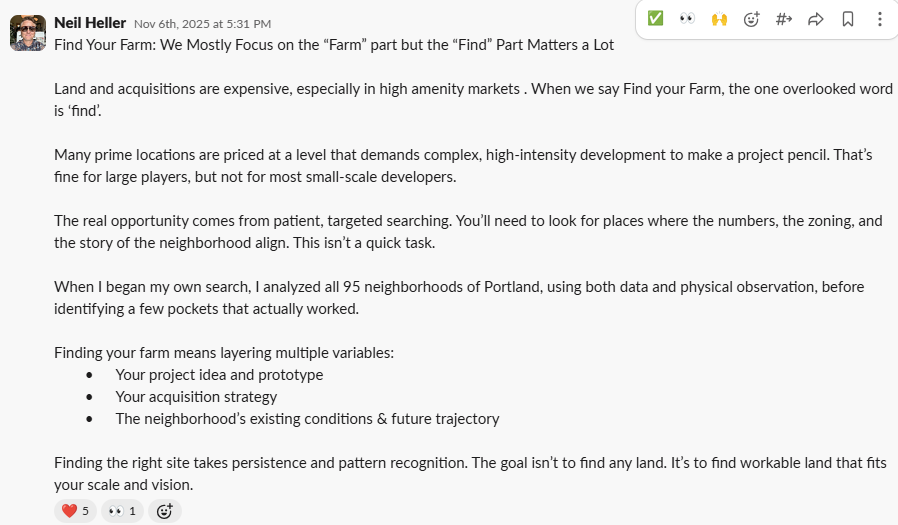
In November 2025, Neil posted a very insightful summary in the IncDev alumni Slack channel about his personal experience finding his farm, stating:
What’s Holding Small-Scale Developers Back?
I thoroughly enjoyed this post by Neil and it resonated with me because the “find your farm” advice is simple, but the “find” part does matter a lot and is not easy in reality. Survivor bias (ie. “If I can do it, anyone can!”) prevails for those lucky enough to have already found their farm. So I, like many other young, budding small-scale developers, want to join the growing number of small-scale developers and help build more housing units in our neighborhoods as quickly as possible, but we have not found our farm yet. Neil is absolutely correct that land and acquisitions are expensive and risky, especially for fellow small-scale developers that are still relocating around the continent every few years for jobs, partners, climate, scenery, lifestyle, etc.
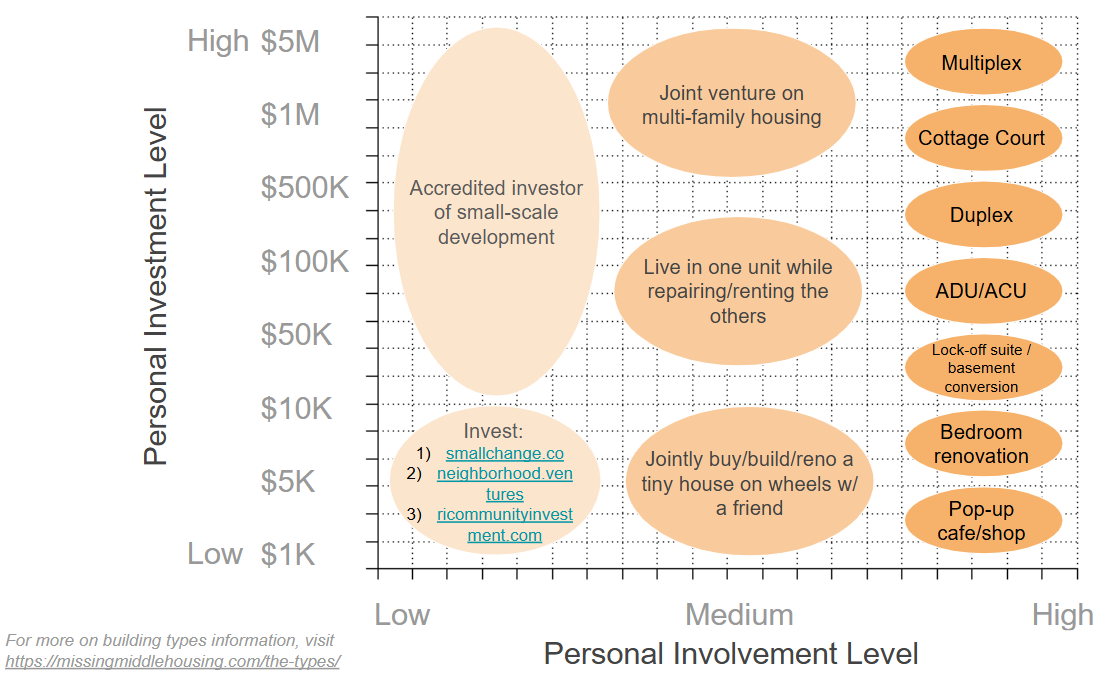
I would relish the opportunity to help ST, IncDev, and NEVO provide more support to those small-scale developers still in the “farm-finding” phase because urbanist vagabonds like myself, and the entire small-scale development movement, need all the help we can get. Our continent-wide housing shortage depends on it. Keeping this article short, I’ve simplified all my learning into a chart to help other budding small-scale developers in the same life stage as me (limited available capital, limited involvement capacity, or both):
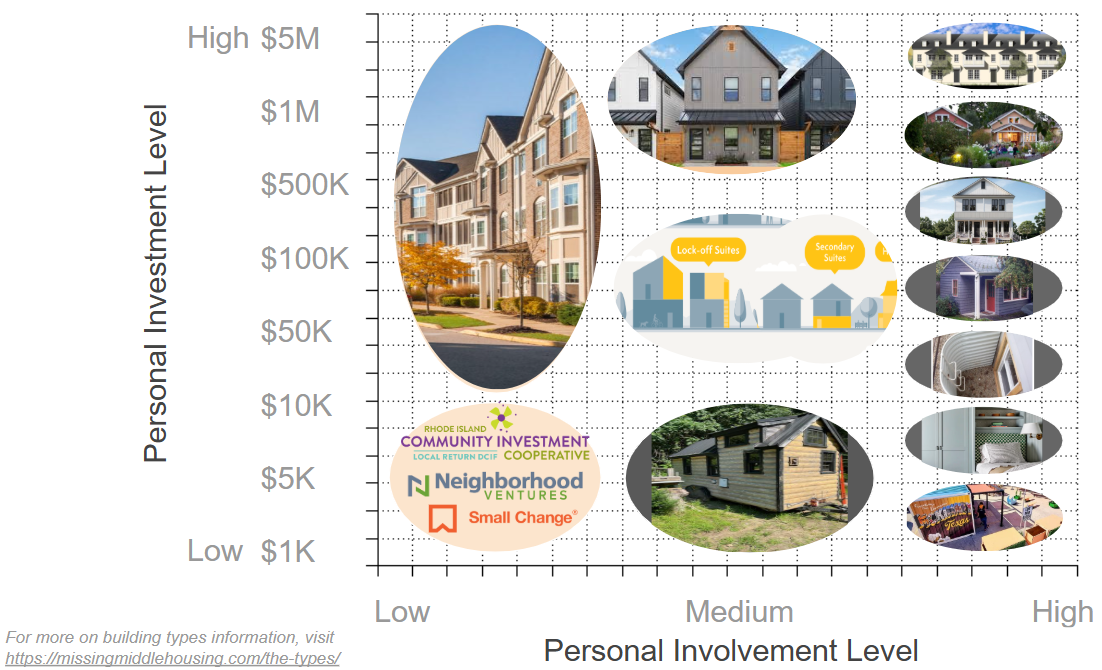
The charts above (clearer slides here, with sources in slide notes) show various examples of ways that small-scale developers can start joining the movement, even if you are:
- young,
- inexperienced,
- geographically transient, or
- have limited investment capital.
How to use the chart above? I want to highlight that the x-axis states “personal” involvement level in a low-to-high range per endeavor, not total human-hours involvement per endeavor. Rough guide on personal involvement levels might include:
- Low, passive: you simply invest the funds, a separate entity handles all the daily tasks, then you simply wait for the dividends or return-on-investment (ROI) to start rolling in.
- Medium: you directly fund some portions/percentage of the endeavor, self-perform some task(s) or at least manage some scope(s), then wait to collect whatever portion/percentage of the profits once complete.
- High, active: you directly purchase the hard costs (materials, equipment, etc.) and/or soft costs (permits, engineering drawings, etc.), self-perform many daily tasks (likely on-site), subcontract only scopes/tasks that cannot be performed personally (earthwork, MEP trades, listing agent, property mgmt, etc.), then wait to collect most, if not all, of the profits once complete.
Your Lifestyle and Your Farm
If you’re stationary (at least for now), want to be highly involved in your project, and can self-perform many of the day-to-day tasks, you could convert space in your home into a rentable bedroom (like Noah Tang of ST BloNo did) or create a pop-up shop or temporary cafe for as little as a few thousand dollars. If you cannot be involved in the development and do not have much investment capital available, small-scale development crowdfunding platforms like Small Change, Neighborhood Ventures, Honeycomb Credit, or the Rhode Island Community Investment Cooperative. They are great because they invite many types of investors with a very low barrier-to-entry (minimum investments of $250, $1K, $5K) and direct public offerings.
If you cannot be involved directly in small-scale development or you are still quite transient, you’d probably qualify as an accredited investor if you have lots of available investment capital. If you know a friend that wants to split the cost of buying, building, or renovating a tiny house on wheels with you, that might only set you back $10K-20K and the daily tasks won’t fall exclusively on you (medium involvement.) If you and your partner(s)/neighbor(s) want to buy a fixer-upper dwelling or already have space to build a backyard cottage (aka, ADU) or Accessory Commercial Unit (ACU) for $50K-200K, it could start generating rental income immediately (aka, “house hacking”). There are MANY other small-scale development examples not mentioned above or in the chart, and I often hear of more.
In the chart above, I want to reiterate that the y-axis states personal “investment” level because it is not a donation of any type. This is an investment of your time and resources, your own personal capital at risk (cash equity). Thus, you’re hoping for healthy returns on your investment or, accounting for all hard and soft costs, at least breaking even. This is another key point that leaders from both IncDev and NEVO emphasize because being a small-scale developer is not charity. Negative returns won’t keep folks in small-scale development very long. And if small-scale projects don’t happen, the impact is felt widely because the community won’t see the benefits of additional housing either. As IncDev faculty Ivy Vann states, “If you can’t get the rent, you can’t do the project.” Increased amounts of personal investment in small-scale development, especially at the level of complexity that IncDev and NEVO and others operate in, requires decades of full-time, persistent, hands-on experience.
Unleash the Swarm
If you’re like me, you like what you hear and you want to join the growing “swarm” of small-scale developers and builders. Wait, what is the “swarm”? The term “swarm” was coined by urban planner Kevin Klinkenberg and referenced by Daniel Herriges in his free e-book, Unleash the Swarm:
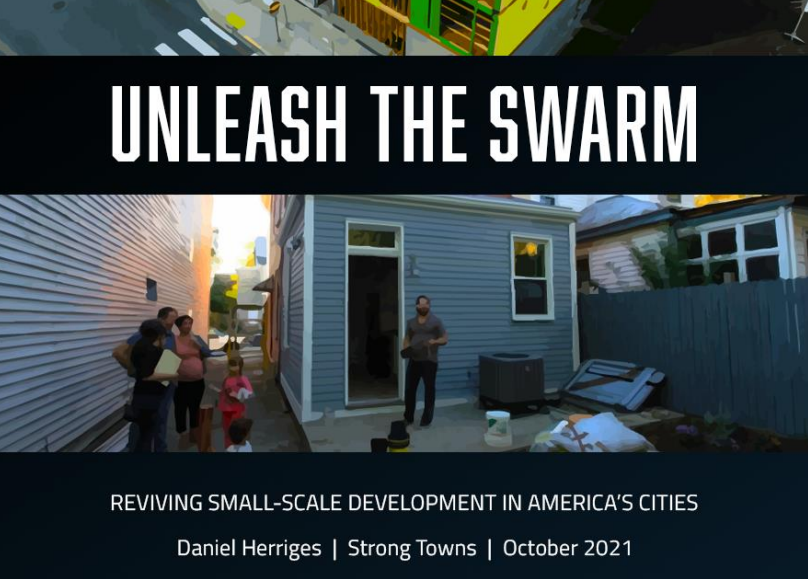
Even “swarm” is a bit of a misnomer too because it doesn’t have anything to do with honeybees, insect migrations, or entities overwhelming places with malicious intent. According to Herriges’ e-book, “unleashing the swarm” means:
“…reviving small-scale development as a force significant enough to shape and grow our cities. Not a handful of intrepid entrepreneurs here and there, but a “swarm” of many times more builders and rehabbers, all working independently but collectively to create great places. Think of them as the pollinators of the city.”
This entire movement needs zoning reform to effectively allow thousands, if not millions, of teamwork-driven neighbors to start building and increasing the supply of housing units (of all types) to meet their community needs. ST’s vision contrasts starkly with the big-time profit-chasing developers who have led housing construction for the past 75 years in suburban North America. Even now, in 2026, ST highlights that “the housing people are looking for may not be what cities are built to deliver.” Or as Alli Thurmond Quinlan, Acting Director of IncDev, states, “If you want to see housing built, you have to do it yourself.” So in short, we have our work cut out for us.
Why Start?
So if small-scale development is complex and risky, why invest in it? Because as former U.S. president Barack Obama quoted U.S. Army Sergeant First Class Cory Remsburg saying “Nothing in life that’s worth anything is easy.” Probably the truest quote of all time. Many folks support small-scale development but do not know where to start, especially if they’re young and/or transient. If you have just $1K of capital available to invest, you could take the easy route and simply invest in some faceless, low-fee index fund on Wall Street with enticing capital gains (but which largely propagates suburban sprawl by funding extraction-based consumerism economies)…
…OR…
…you could invest that $1K into communities that you and many others truly care about via small-scale development in various ways.
The choice is yours.